
Why Effective Tenant Screening Can Make the Difference Between Real Estate Investing Success and Costly Failure
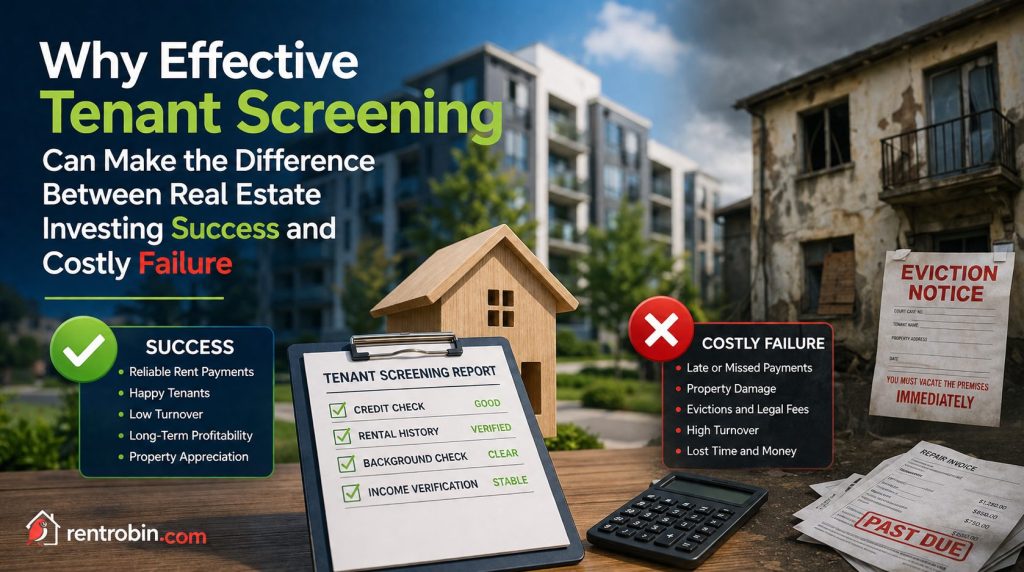
Real estate investing is often marketed as one of the best ways to build long-term wealth. Rental properties can generate monthly cash flow, appreciate over time, provide tax advantages, and create opportunities for portfolio growth. But while investors spend a great deal of time analyzing purchase prices, financing terms, rehab costs, and projected rental income, one of the most important factors in long-term success is sometimes underestimated: who you place in the property. At Rent Robin Property Management, we believe effective tenant screening is one of the most important safeguards a rental property owner has. A strong screening process does far more than simply fill a vacancy. It helps protect your cash flow, reduce your risk, preserve the condition of your property, minimize legal headaches, and support the long-term profitability of your investment. The truth is simple: the wrong tenant can turn a promising investment into a costly problem very quickly. Missed rent payments, lease violations, property damage, neighbor complaints, unauthorized occupants, repeated turnover, and expensive eviction proceedings can wipe out months—or even years—of profits. On the other hand, the right resident can provide stable income, take care of the home, communicate responsibly, and contribute to a smoother, more successful ownership experience. That is why tenant screening is not just an administrative step in the leasing process. It is a core investment protection strategy. In this blog, we will break down why tenant screening matters so much, how poor screening can hurt your bottom line, what effective tenant screening should include, and why working with a professional Kansas City property management company can help rental owners avoid costly mistakes. Why Tenant Screening Matters in Real Estate Investing Every investment property owner wants the same basic outcome: consistent rent collection, low vacancy, minimal damage, and strong long-term returns. Tenant screening plays a major role in all four. When you hand over the keys to a resident, you are not simply renting out a house or apartment. You are giving someone access to an asset that may be worth hundreds of thousands of dollars, and you are relying on them to meet a legally binding financial obligation every month. That decision should never be treated casually. A thorough screening process helps answer some of the most important questions a rental owner can ask: Does this applicant have a history of paying housing-related obligations on time? Is their income sufficient and stable enough to support the rent? Have they respected lease agreements in the past? Are there prior evictions or serious landlord disputes? Are there warning signs that suggest higher financial or behavioral risk? Does the application information appear accurate, complete, and verifiable? Without screening, or with a weak screening process, owners are essentially making a major business decision with incomplete information. In real estate investing, that is a dangerous way to operate. The Financial Cost of Placing the Wrong Tenant One of the biggest misconceptions in rental property investing is that a bad tenant only becomes a problem if they stop paying rent. In reality, the financial damage from poor tenant placement can show up in many different ways. 1. Lost rental income The most obvious cost is missed or late rent payments. If a tenant falls behind, the owner still has a mortgage, taxes, insurance, maintenance expenses, utilities, and other holding costs to cover. Even one or two months of nonpayment can disrupt cash flow. If the situation escalates into an eviction, the lost income can multiply quickly. 2. Property damage and deferred maintenance A poorly screened tenant may neglect the property, hide maintenance issues, violate lease terms, or cause avoidable damage. Minor issues can become major repairs when residents fail to report leaks, HVAC problems, plumbing concerns, or other maintenance needs in a timely manner. Intentional or careless damage can also significantly increase turnover costs. 3. Legal and court expenses Evictions are expensive. Filing fees, attorney fees, court costs, lockout coordination, unpaid rent balances, cleaning, repairs, and vacancy loss all add up quickly. Even when an owner ultimately regains possession of the property, the financial damage can be substantial. 4. Increased turnover and vacancy If a tenant is not a good fit from the beginning, the tenancy may be short-lived. High turnover means additional cleaning, repairs, marketing, showings, screening, lease preparation, and vacancy loss. Frequent turnover erodes profitability and creates unnecessary operational stress. 5. Neighborhood and reputation issues Problem tenants can create complaints from neighbors, violate HOA rules, disturb surrounding residents, or damage the reputation of a rental property. In multifamily settings, one poor placement can create tension with other residents and increase overall management challenges. 6. Time and emotional strain While this may not appear on a profit-and-loss statement, it matters. Chasing rent, managing conflict, responding to lease violations, dealing with court proceedings, and repairing a damaged property can be exhausting for owners—especially self-managing investors with other jobs, businesses, or family responsibilities. When you add up lost rent, legal fees, repairs, vacancy, and time, a single bad tenant decision can cost thousands of dollars. In some cases, it can be the difference between a profitable year and a major setback. Why “Just Filling the Vacancy” Is a Dangerous Strategy Vacancy can be stressful for any rental owner. Every day a property sits empty is a day without rental income. Because of that, some landlords feel pressure to place a tenant quickly just to get the property occupied and the cash flow restored. That mindset is understandable—but it can also be extremely costly. At Rent Robin Property Management, we believe the goal is not simply to fill a vacancy as fast as possible. The goal is to place the right tenant as efficiently as possible. A rushed leasing decision can create much bigger losses than a few extra days or weeks of vacancy. The wrong approach often sounds like this: “They
Why Political Involvement Matters in Kansas City Property Management and Housing Policy
When most people think about property management, they think about leasing, rent collection, maintenance, inspections, and resident communication. Those are all essential parts of managing rental property well. But there is another side of property management that often gets overlooked until a new ordinance is passed, a housing bill is introduced, or a regulatory change suddenly impacts how rental properties operate. That side is political involvement. At Rent Robin Property Management, we believe that housing professionals, property owners, investors, and real estate leaders should pay close attention to public policy and remain actively engaged in conversations that affect housing. Why? Because real estate and rental housing are deeply influenced by government decisions at the local, state, and national level. From landlord-tenant laws and property taxes to zoning, permitting, code enforcement, rental regulations, and housing incentives, politics directly affects the cost, availability, and long-term health of rental housing. And in recent years, one thing has become increasingly clear: politicians are becoming far more in tune with housing issues. Housing affordability, supply shortages, neighborhood revitalization, development barriers, and tenant protections are no longer fringe issues discussed only by industry insiders. They are central economic and community issues that affect employers, families, investors, municipalities, and entire regions. That growing awareness is important—and it is exactly why political involvement matters more than ever for those of us who work in real estate and property management every day. At Rent Robin, we are proud of our involvement with the Kansas City Regional Association of Realtors (KCRAR) Legislative Affairs Committee, because we believe staying engaged in housing-related policy discussions is part of being a responsible, informed, and forward-thinking property management company in Kansas City. Housing Policy Impacts Every Kansas City Rental Property Owner If you own rental property in Kansas City or anywhere in the metro, public policy affects your investment whether you realize it or not. Housing-related legislation and local regulations can influence: rental licensing and registration requirements landlord-tenant law and eviction procedures property tax burdens inspection standards and compliance rules development and redevelopment incentives zoning restrictions and land use decisions maintenance and habitability standards insurance and liability exposure affordability initiatives and housing funding priorities In other words, the business of owning and managing rental property does not operate in a vacuum. It operates within a legal and political framework that is constantly evolving. For property owners, that means staying politically aware is not just about ideology or civic interest—it is about protecting your investment, understanding market risks, and staying ahead of changes that could impact profitability and operations. For property managers, it means recognizing that our role goes beyond day-to-day logistics. We are also helping clients navigate a housing environment shaped by policy decisions that can affect everything from leasing timelines to operating expenses. Why Housing Has Become a Major Political Issue Over the last several years, housing has moved to the forefront of public policy conversations across the country, and Kansas City is no exception. There are several reasons for this. Housing affordability is a growing concern. As home prices, insurance premiums, property taxes, maintenance costs, and interest rates have increased, both renters and property owners have felt the pressure. Politicians are paying more attention to affordability because housing costs affect families, workforce mobility, and overall economic stability. Housing supply remains a challenge. Many communities are struggling with a shortage of available housing, particularly affordable and workforce housing. When supply is limited, prices rise, competition increases, and both renters and buyers feel the squeeze. Local and state leaders are increasingly looking for ways to encourage development, redevelopment, and housing preservation. Aging housing stock needs reinvestment. In many markets, including older neighborhoods throughout the Kansas City metro, aging housing inventory requires repairs, modernization, and ongoing investment. Lawmakers and local officials are paying closer attention to how code enforcement, redevelopment policy, and investment incentives affect neighborhood stability and housing quality. Housing is directly tied to economic growth. Employers need workers, and workers need housing they can afford within a reasonable distance of their jobs. When housing becomes scarce or unaffordable, it creates ripple effects throughout the local economy. Political leaders are increasingly aware that housing is not just a real estate issue—it is an economic development issue. Communities want balanced tenant and landlord protections. As more attention is placed on housing security and resident rights, policymakers are also examining landlord responsibilities, court processes, maintenance requirements, and rental regulations. These conversations are important, but they also need input from professionals who understand how housing actually functions in the real world. That is where political involvement becomes so important. Why Property Managers and Housing Providers Need a Voice The people who work in housing every day have a perspective that is critical to effective policymaking. Property managers understand the practical realities of operating rental housing. We know what it costs to turn a property, maintain systems, respond to emergencies, manage vendors, stay compliant, and keep homes market-ready. We understand how quickly small changes in regulation can create major administrative and financial burdens. We also understand that while good policy aims to solve problems, poorly structured policy can unintentionally create new ones. Rental property owners and investors bring another essential perspective. They understand the financial side of housing: taxes, insurance, capital improvements, vacancy risk, financing, cash flow, and return on investment. They know what encourages reinvestment in a neighborhood—and what discourages it. Residents, community advocates, local leaders, and municipalities also deserve a seat at the table. Their perspectives matter deeply. But effective housing policy requires input from all sides of the housing ecosystem, not just one. When property managers, landlords, Realtors, and investors are absent from policy discussions, decisions may be made without a clear understanding of the operational realities behind housing. That can lead to legislation or ordinances that sound good in theory but create unintended consequences in practice.