
Investment Properties and Maintenance: Why It’s Never Cheaper to Do It Over Than to Do It Right
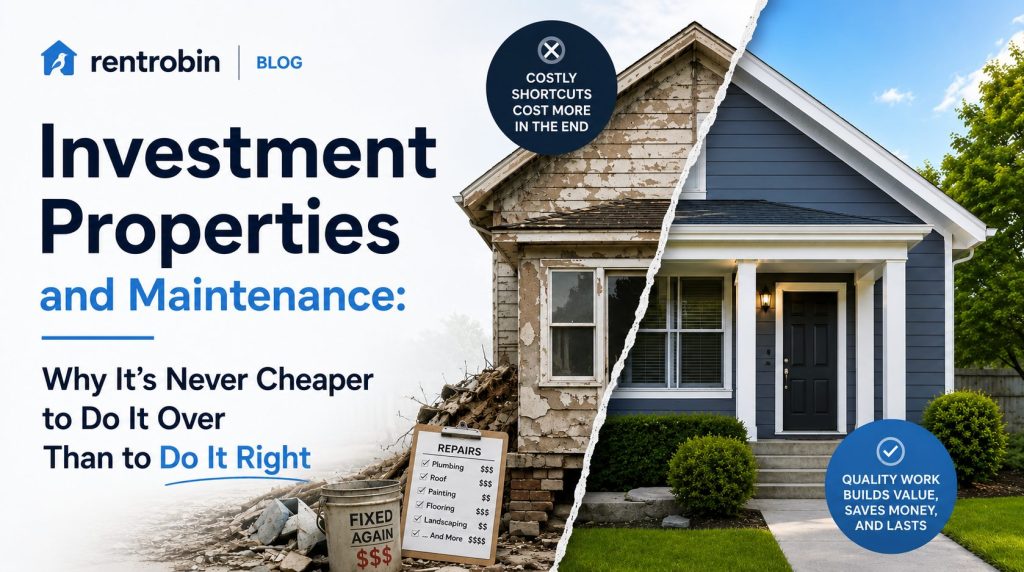
Owning investment property can be one of the most rewarding ways to build long-term wealth. Rental properties provide cash flow, appreciation, tax advantages, and opportunities to grow a real estate portfolio over time. However, one of the most common mistakes property owners make is viewing maintenance and repairs strictly as expenses rather than investments. At Rent Robin Property Management, we frequently encounter situations where property owners attempt to save money by selecting the cheapest repair option, delaying maintenance, or using temporary fixes instead of permanent solutions. While these decisions may reduce immediate costs, they often lead to significantly higher expenses down the road. The old saying remains true in property management: “There is never enough money to do it right the first time, but somehow there is always enough money to do it over.” Let’s explore why quality maintenance matters, how deferred repairs impact profitability, and why doing things correctly from the beginning protects both your property and your investment returns. The True Cost of Deferred Maintenance Many property owners assume postponing maintenance saves money. In reality, deferred maintenance almost always becomes more expensive. Consider a minor roof leak. A small repair today may cost a few hundred dollars. Ignore it for several months, however, and that same leak can result in: Damaged insulation Ceiling repairs Mold remediation Drywall replacement Flooring damage Tenant complaints Potential habitability issues What could have been a simple repair quickly turns into a multi-thousand-dollar project. The same principle applies to virtually every component of a rental property. Small problems rarely stay small. Common Examples of Deferred Maintenance HVAC Systems Skipping annual maintenance may save a small service fee. However, dirty coils, clogged filters, and neglected components force systems to work harder. The result? Higher utility consumption More service calls Reduced lifespan Premature system replacement A furnace or air conditioner that should last 15-20 years may fail after only 8-10 years due to neglect. Plumbing Issues A small drip under a sink seems harmless. Over time, however, it can lead to: Cabinet damage Flooring replacement Mold growth Structural deterioration The cost of replacing a faucet washer pales in comparison to replacing an entire kitchen cabinet system. Exterior Maintenance Ignoring peeling paint, damaged siding, or failing caulk can allow moisture intrusion into the structure. Water is often referred to as a property’s worst enemy because it causes: Rot Mold Insect infestations Foundation issues Structural damage A few tubes of caulk and routine maintenance can prevent thousands of dollars in future repairs. Cheap Repairs Often Become Expensive Repairs When faced with maintenance decisions, some investors focus solely on the lowest bid. While cost is certainly important, choosing a contractor based exclusively on price can be risky. Not all repairs are created equal. The Lowest Bid Isn’t Always the Best Value A contractor may offer a lower price because: Inferior materials are being used Workmanship standards are lower Necessary steps are omitted Warranty coverage is limited Licensing or insurance may be inadequate Unfortunately, when the repair fails six months later, the property owner often pays twice. The first repair cost is lost, and a second contractor must fix both the original issue and the poor workmanship. Temporary Fixes vs Permanent Solutions Many owners choose temporary fixes hoping to postpone larger expenses. Examples include: Patching instead of replacing deteriorated roofing sections Covering damaged flooring rather than correcting moisture problems Repairing failing plumbing repeatedly instead of replacing aging lines Painting over water stains instead of finding the leak Temporary solutions often create a cycle of recurring repairs. Over time, multiple service calls frequently exceed the cost of a proper repair completed initially. Tenant Retention Depends on Property Condition Maintenance isn’t just about preserving the building. It’s also about retaining quality tenants. Good tenants have options. They want to live in homes that are: Safe Functional Clean Well-maintained Professionally managed When maintenance requests are repeatedly delayed or repaired improperly, tenant satisfaction declines. The Cost of Tenant Turnover Many owners underestimate the financial impact of tenant turnover. Turnover expenses may include: Vacancy loss Marketing costs Leasing fees Cleaning Painting Repairs Utility expenses Even one month of vacancy can easily exceed the cost of many preventative maintenance items. A well-maintained property encourages tenants to renew leases and stay longer, reducing turnover costs and increasing profitability. Quality Maintenance Protects Property Value Investment properties are assets. Just as investors monitor stocks, retirement accounts, and business investments, rental property owners should actively protect their real estate assets. Property values are heavily influenced by condition. Potential buyers notice: Roof condition HVAC systems Plumbing quality Exterior appearance Flooring Kitchens Bathrooms Properties with extensive deferred maintenance often sell for significantly less than comparable homes that have been properly maintained. Appraisal Challenges Deferred maintenance can also impact refinancing and appraisal values. Appraisers frequently note: Damaged flooring Missing handrails Roofing concerns Water damage Safety issues These deficiencies can affect financing options and reduce overall property valuation. Protecting asset value requires ongoing investment in maintenance. The Financial Benefits of Preventative Maintenance Preventative maintenance is one of the most effective tools for maximizing return on investment. Instead of reacting to emergencies, proactive owners address issues before they become major problems. Benefits Include: Lower Repair Costs Small repairs are almost always less expensive than major renovations. Fewer Emergencies Emergency service calls often include: After-hours charges Weekend premiums Holiday rates Preventative maintenance reduces these unexpected expenses. Extended Equipment Life Routine servicing extends the lifespan of: HVAC systems Water heaters Appliances Roofing systems Plumbing fixtures Better Tenant Satisfaction Prompt maintenance improves resident retention and overall tenant experience. Higher Property Values Well-maintained homes command stronger rents and better resale values. Why Professional Property Management Matters Many property owners are experts in investing but not necessarily experts in property maintenance. This is where professional property management provides tremendous value. At Rent Robin Property Management, we understand the importance of balancing cost control with long-term asset preservation. Our approach includes: Vendor Relationships Over time, we develop relationships with trusted vendors who provide: Quality workmanship Competitive pricing Reliable service Professional communication